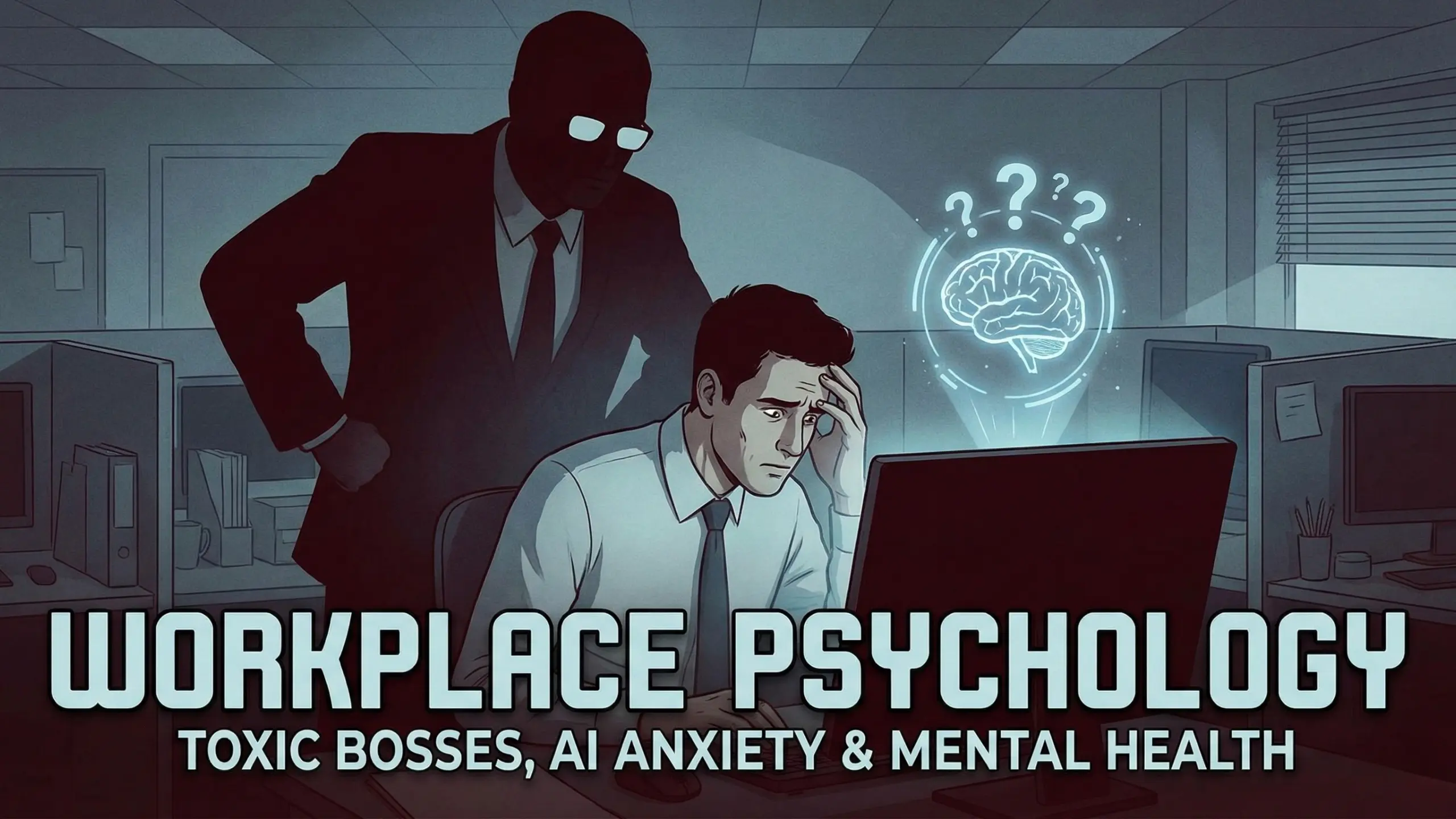
Work has undergone unprecedented changes in the last few years. In 2026, we are not just tired; we are facing a global “identity crisis” at our jobs. Data shows that 83% of workers feel burned out, and employee engagement has crashed to a low of 64%.
Why is this happening? Many of us are concerned that Artificial Intelligence (AI) will replace us, and we miss the feeling of safety and connection with our teams. Workplace Psychology is the answer to these big problems. It is the science that helps us understand our feelings, build trust, and make work a happy place for humans again.
Table of Contents
What is Workplace Psychology?
Workplace psychology is the science of how people think, feel, and act at work. It is also called Industrial-Organizational (I-O) psychology.
This field looks at two main things:
- The “Industrial” side: This focuses on matching the right person to the right Job. It utilizes data to enhance hiring and training processes.
- The “Organizational” side: This focuses on behavior. It examines leadership, team culture, and strategies for maintaining employee happiness and well-being.
The goal is simple: to make work better for people and more successful for companies.
Download Book: Mental Health and Wellbeing in the Workplace Link
Science-Backed Strategy, Not Just Motivation.
“Most career advice tells you to ‘work harder,’ but that ignores how your brain actually functions.
I am Hassam Shabbir, a Digital Strategist with 7+ years of corporate experience and a background in Psychology. I bridge the gap between business goals and human biology to help you build focus and influence without the burnout.”
Why Workplace Psychology Matters in 2026
Work has changed a lot. In 2026, many people work from home or have a “hybrid” schedule. This makes understanding human behavior more important than ever.
Why is it urgent now?
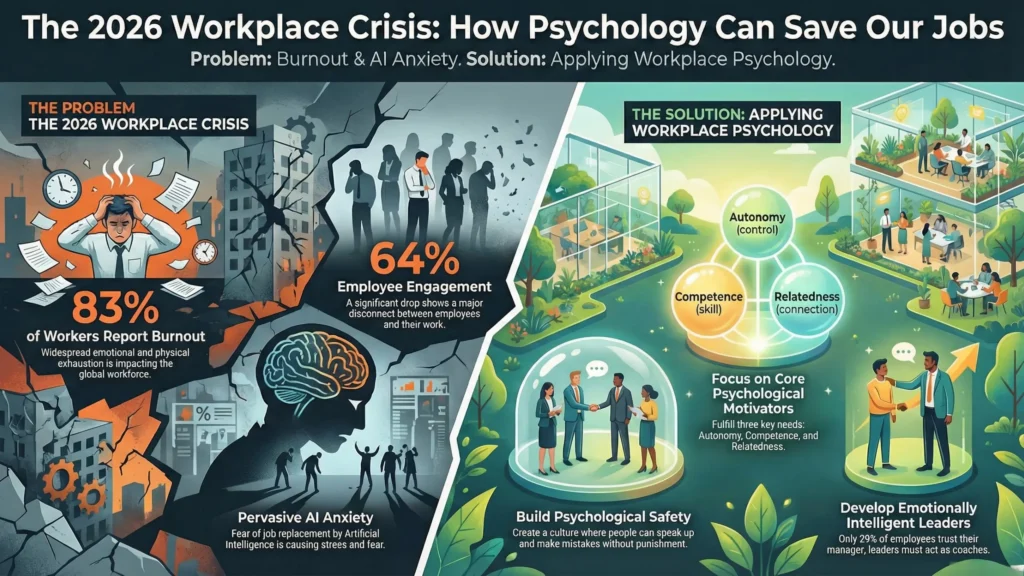
- Burnout is prevalent: Approximately 83% of workers globally report feeling burned out.
- Engagement is low: Employee engagement has dropped to 64% globally.
- AI anxiety: Many workers are scared that Artificial Intelligence (AI) will take their jobs. That causes stress and fear.
Companies need psychology to solve these problems. When employees feel safe and valued, they work better and stay longer.
Key Areas of Workplace Psychology
1. Motivation: What Drives Us?
Money is essential, but it is not the only thing that matters. In 2026, professional development is the primary driver of employee engagement.
There are three primary psychological needs for motivation:
- Autonomy: Feeling like you have control over your work.
- Competence: Feeling like you are good at your Job.
- Relatedness: Feeling connected to your team.
If a job meets these needs, people are motivated to perform well. If it doesn’t, they may “quiet quit” (do the bare minimum).
2. Leadership and Trust
Good leaders today act more like coaches than bosses. They need Emotional Intelligence (EQ). That means they can understand and manage both their own and their team’s feelings.
In 2026, trust is low. Only 29% of employees trust their direct manager. To address this, leaders must be transparent and honest, particularly when it comes to significant changes, such as the adoption of AI.
3. Psychological Safety
This is a very important concept. Psychological safety means you can speak up, ask questions, or make mistakes without being punished.
Research shows that psychological safety is the foundation of learning. If a team feels safe, they will innovate. If they feel scared, they will hide their mistakes.
4. Team Dynamics in a Hybrid World
Many teams now work in different places. This is called a hybrid workplace. Establishing a strong culture can be challenging when team members are not in the same physical location.
Successful hybrid teams focus on structured flexibility. This means the team decides together when to meet and when to work alone. This builds trust and lowers stress.
Download Book: Workplace Psychology: Mental Health Issues Link
Common Workplace Problems
Burnout
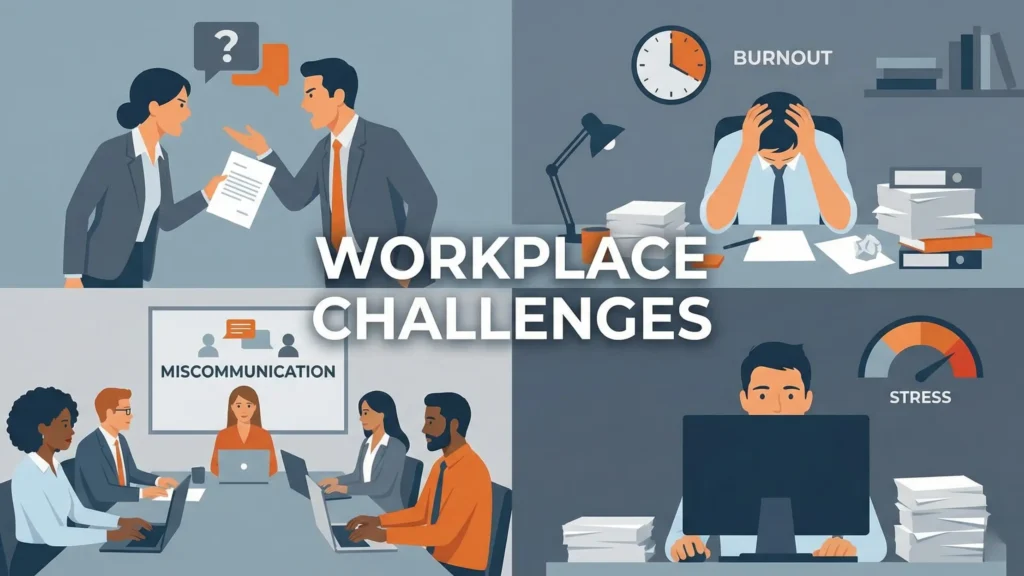
Burnout is not just being tired. It is a state of emotional and physical exhaustion. It happens when you have too much work and not enough support.
Signs of burnout:
- Feeling empty or cynical.
- Lack of energy.
- Feeling like your work does not matter.
In 2026, a significant contributor to burnout is a lack of recognition. People need to feel seen and appreciated for their work.
Toxic Leadership
A toxic leader hurts the team. They might be inconsistent, rude, or manipulative. This creates a “threat state” in the brain. When the brain feels threatened, it cannot think clearly or be creative.
AI Anxiety
Many workers worry about AI. They fear it will replace them. This is called AI anxiety. It can lead to depression and lower job satisfaction.
However, when companies clearly explain AI and use it to assist workers (not replace them), it can actually reduce stress by automating tedious tasks.
Benefits of Workplace Psychology
Using psychology at work helps everyone.
For Employees:
- Better Mental Health: Less stress and anxiety.
- More Satisfaction: Feeling happy and valued at work.
- Growth: Learning new skills and advancing careers.
For Companies:
- Longer Job Stays: Individuals are more likely to remain in their jobs for an extended period when they feel valued and secure.
- Increased Productivity: When employees are happy, they tend to work more efficiently and effectively.
- Enhanced Creativity: Teams that feel safe and supported are more likely to generate innovative new ideas.
Frequently Asked Questions (FAQs)
Q: What is the difference between HR and Workplace Psychology?
HR (Human Resources) handles the administration of people, like payroll and policy. Workplace Psychology is the science behind behavior. It explains why people act the way they do at work.
Q: Can a toxic workplace make you sick?
Yes. Chronic stress from a toxic job can lead to physical illness, anxiety, and depression. It is sometimes referred to as a “psychosocial hazard.”
Q: What is “coffee-badging”?
This is a new trend where employees go to the office for a few hours just to be seen (“badge in”) and get coffee, then go home to do their actual work. About 43% of hybrid workers admit to doing this.
Q: How do I recover from burnout?
Recovery takes time. It involves setting boundaries, taking breaks, seeking support, and sometimes changing your workload.
Final Thoughts: The Human Future of Work
Work is changing faster than ever before. In 2026, we have powerful AI and flexible offices, yet 83% of us still feel burned out. This reveals a significant truth: technology alone cannot save us. The future of work is not about better machines; it is about healthier humans.
The concept of an “identity crisis” at work is a real phenomenon. We are figuring out where we fit in a world of robots and remote logins. The companies that win in the future will not be the ones that force people back to desks or track their mouse movements. They will be the ones who build trust.