
Disclaimer: This guide is for educational purposes only. It is not medical advice. If you feel hopeless or have a medical emergency, please contact a doctor, mental health professional, or crisis helpline immediately.
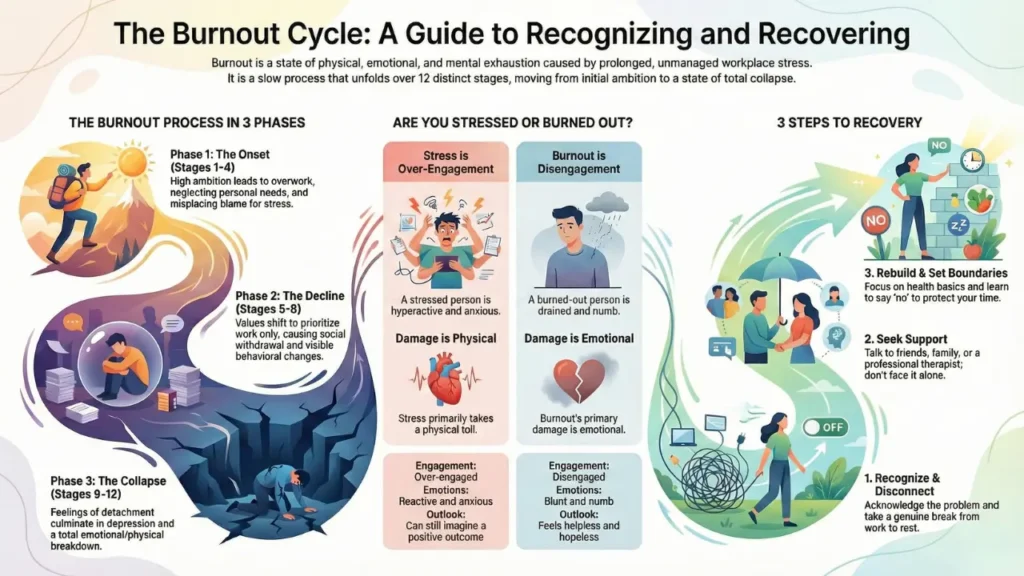
Burnout is a slow process. It does not happen overnight. It builds up over time due to chronic stress that is not managed well. In workplace psychology, experts Herbert Freudenberger and Gail North identified 12 specific stages of this cycle.
This guide explains each stage simply. It will help you spot the warning signs early and find a work-life balance.
Table of Contents
What Is Burnout?
Burnout is a state of physical, emotional, and mental exhaustion caused by long-term stress.
It occurs when you feel overwhelmed and unable to meet constant demands. The World Health Organization (WHO) defines it as an “occupational phenomenon” resulting from prolonged exposure to chronic workplace stress. It leads to emotional exhaustion, cynicism, and a sense that you cannot perform your job effectively.
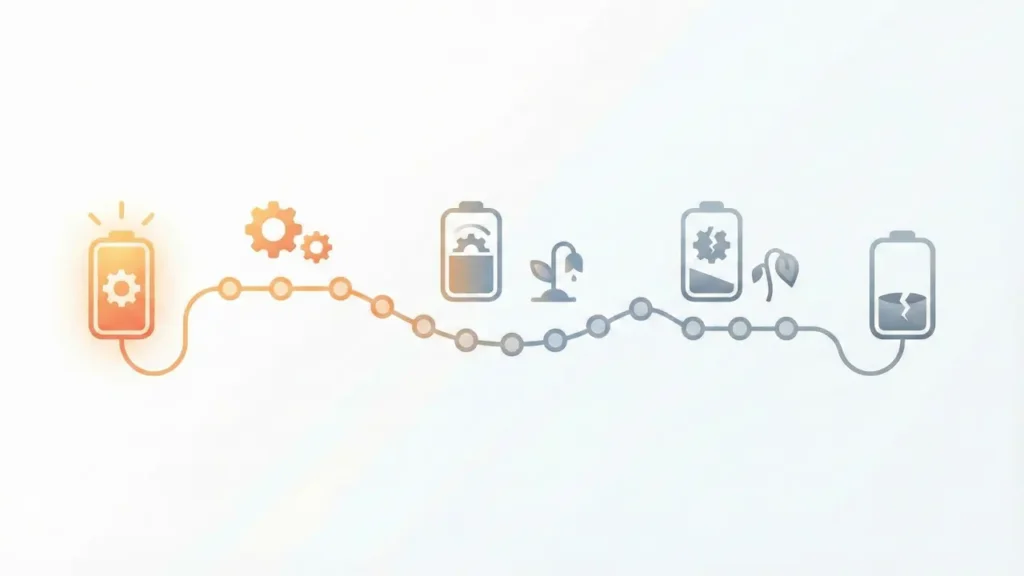
The 12 Stages at a Glance
- The Compulsion to Prove Oneself
- Working Harder
- Neglecting Needs
- Displacement of Conflicts
- Revision of Values
- Denial of Emerging Problems
- Withdrawal
- Odd Behavioral Changes
- Depersonalization
- Inner Emptiness
- Depression
- Burnout Syndrome
Why Trust This Guide?
“Burnout is not just ‘tiredness’; it is a psychological condition that requires a scientific approach.
This article is written by Hassam Shabbir, a Psychologist and Digital Strategist trained in Psychological First Aid (WHO) and Suicide Prevention (QPR). The strategies below are backed by human psychology, not just internet trends.
Detailed Breakdown of the 12 Stages of Burnout
Here is what happens in each stage of the cycle, including simple workplace examples.
Stage 1: The Compulsion to Prove Oneself
This is the starting point. You have high ambition. You want to show everyone you can do the job perfectly. You might feel obsessed with proving your worth at work.
- Workplace Example: You volunteer for every new project to demonstrate to your boss that you are the best worker.
Stage 2: Working Harder
You realize the workload is high. Instead of asking for help, you push harder. You find it hard to disconnect from work. This leads to mental fatigue.
- Workplace Example: You often stay late at the office and answer emails on weekends.
Stage 3: Neglecting Needs
You put work above everything else. You view sleeping, eating, and spending time with friends as a waste of time. You feel tired, but you keep going.
- Workplace Example: You skip lunch to finish a report and get only 4 hours of sleep a night.
Stage 4: Displacement of Conflicts
You know something is wrong, but you do not blame work. You blame your boss, your partner, or the traffic. You feel jittery and panicky. The real problem lies deep within.
- Workplace Example: You snap at your spouse for asking how your day was, but you deny being stressed about your deadlines.
Stage 5: Revision of Values
Your life changes completely. Work is now the only thing that matters. Friends, hobbies, and sports are seen as unimportant. You judge people who are not working as hard as you.
- Workplace Example: You stop going to the gym or hanging out with friends because “work is more important”.
Stage 6: Denial of Emerging Problems
You become intolerant and aggressive. You might view coworkers as lazy or stupid. You deny that you are suffering from occupational stress. You blame the workload for your bad mood.
- Workplace Example: You complain that your team is incompetent and that you have to do everything yourself.
Stage 7: Withdrawal
You pull away from social life. You see friends and family as a burden. You might use alcohol or drugs to cope with stress. You feel like you have no direction.
- Workplace Example: You eat lunch alone at your desk to avoid talking to anyone.
Stage 8: Odd Behavioral Changes
Your friends and family notice you have changed. You might be fearful, shy, or apathetic. You snap at people for small reasons. These changes are obvious to everyone but you.
- Workplace Example: You slam doors or yell at a colleague for a minor mistake.
Stage 9: Depersonalization
You feel detached from yourself. You might feel like a machine or a robot. You no longer see yourself or others as valuable individuals. Life feels mechanical.
- Workplace Example: You sit in meetings feeling numb, just going through the motions without caring about the outcome.
Stage 10: Inner Emptiness
You feel empty inside. To fill this void, you might take risks. This can include overeating, drug use, or excessive spending. You feel useless and anxious.
- Workplace Example: You binge-eat junk food after work to feel something other than stress.
Stage 11: Depression
You feel lost and unsure. The future looks bleak and dark. You feel exhausted and hopeless. You believe life has no meaning. This is a sign you need professional care.
- Workplace Example: You struggle to get out of bed in the morning because you feel work is pointless.
Stage 12: Burnout Syndrome
This is a total collapse. You break down physically and emotionally. You cannot work or function normally. This is not a failure; it is a signal that you need immediate medical or psychological help to heal.
- Workplace Example: You faint at work or have a panic attack that prevents you from entering the office.
Stress vs. Burnout: What is the Difference?
It is essential to recognize when you are experiencing stress or burnout. They are not the same thing.
| Feature | Stress | Burnout |
| Engagement | Over-engaged (trying too hard) | Disengaged (given up) |
| Emotions | Reactive and anxious | Blunt and numb |
| Energy | Hyperactive and urgent | Drained and empty |
| Primary Damage | Physical toll | Emotional toll |
| Outlook | Can typically still imagine a positive outcome | Feels helpless and hopeless |
Common Signs and Symptoms Checklist
How do you know if you are at risk? Look for these signs defined by researchers:
Emotional Signs:
- [ ] Emotional exhaustion: You feel drained and have no energy left.
- [ ] Cynicism: You feel negative or distant from your job.
- [ ] Detachment: You treat people like objects instead of humans.
- [ ] Inefficacy: You feel like you cannot achieve anything.
Physical Signs:
- [ ] Chronic fatigue (always tired).
- [ ] Insomnia (cannot sleep).
- [ ] Headaches or stomach problems.
- [ ] Getting sick often.
How to Recover from Burnout
As you start recovery, remember: burnout doesn’t happen just because you worked too hard.
It also grows where people don’t feel safe to say what they need.
That’s called psychological safety — when teams and workplaces let people speak up without fear.
Creating psychological safety is a key part of lasting recovery and prevention.
Explore this psychological safety article for deeper insight: Click Here
1. Recognize the Problem
You must admit you are burned out. Stop denying your feelings. Awareness is the first step to healing.
2. Disconnect and Rest
You need distance from work. Take a break. Stop checking emails at night. Sleep is essential for repairing your brain and body.
- Note: In many countries, you have the legal right to take time off for mental health. See the “Workplace Rights” section below.
3. Seek Support
Do not do this alone. Talk to friends or family. Seek professional help from a therapist or counselor. Social support is a top predictor of recovery.
4. Rebuild Your Health
Focus on basics. Eat healthy food. Gently move your body to release tension. Avoid alcohol and too much caffeine.
5. Set Boundaries
Learn to say “no.” Do not take on new tasks. Define clear work hours and stick to them to achieve a better work-life balance.
Workplace Rights (USA, UK, Canada)
You may have legal rights if you are suffering from severe burnout. Contact HR or a union representative if you are unsure about your rights.
- USA:
- FMLA: The Family and Medical Leave Act may provide up to 12 weeks of unpaid, job-protected leave for serious health conditions.
- ADA: The Americans with Disabilities Act may offer “reasonable accommodations,” like a flexible schedule, if you have a qualifying disability.
- UK:
- Equality Act 2010: Employers must make “reasonable adjustments” if your condition counts as a disability.
- Sick Pay: You may be entitled to Statutory Sick Pay (SSP) if a doctor signs you off work for stress-related illness.
- Canada:
- Disability Benefits: You may qualify for Short-Term Disability or Long-Term Disability benefits if your condition prevents you from working.
- Human Rights Codes: Employers have a duty to accommodate employees with disabilities, including those with mental health issues.
Frequently Asked Questions (FAQs)
How long does it take to recover from burnout?
Recovery is different for everyone. It can take 3 months to over a year. It depends on the severity of your burnout and the support you receive.
Is burnout a medical condition?
The World Health Organization refers to it as an “occupational phenomenon,” rather than a medical condition. However, it can lead to medical issues like depression, anxiety, and heart disease if left untreated.
Can I recover without quitting my job?
Yes, but you must change how you work. You need strict boundaries, such as no emails after hours. You also need support from your boss to reduce your workload.
What are the main causes of burnout at work?
It is caused by chronic workplace stress. Major causes include heavy workloads, a lack of control, and inadequate rewards. Personal traits, such as perfectionism, also play a role.
Additionally, working under toxic leadership can significantly accelerate burnout by creating a chaotic and fearful environment.
Does burnout affect my brain?
Yes. Chronic stress can affect the brain. It can impact memory, attention, and emotional control. However, these changes are often reversible with proper rest and recovery.